

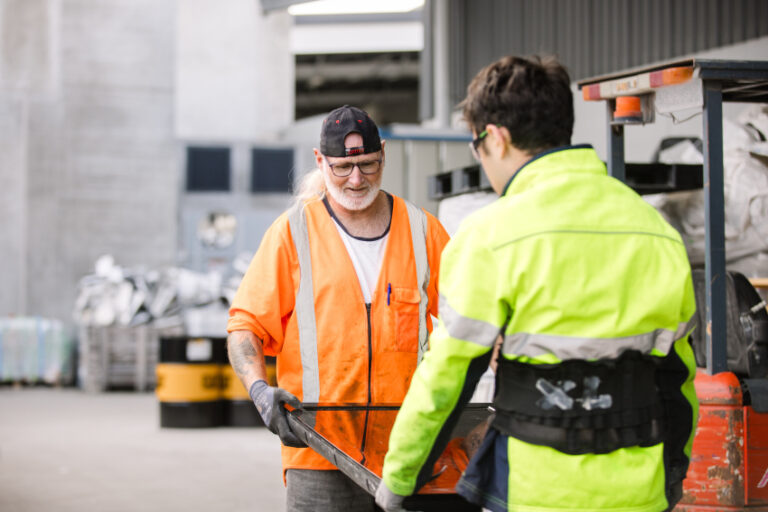
Work can offer choice, connection, and purpose.
Turning 65 doesn’t have to mean stopping work.
For many people, later life is a time to make new choices about how work fits into their lives. This might include paid work, volunteering, or trying something different.
People continue working for many reasons – financial security, social connection, a sense of purpose, or simply because they enjoy it.
New Zealand’s older workforce is set to more than double by 2074. NZIER Business of Ageing 2026
NZIER Business of Ageing 2026
What to consider
You might be thinking about what role work could play in your life now.
There’s no single path. What matters is finding something that works for you, your health, and your interests.
Why people engage in work
Continuing to work can bring a wide range of benefits, many of which are equally relevant to any stage of life. Whether through paid employment, volunteering, or self-employment, ongoing participation in work can support wellbeing, connection, and purpose.
Here are some of the reasons people engage in work:
Staying Connected
Workplaces can provide a sense of community.
Regular contact with others can help you feel connected and reduce isolation. Even part-time or voluntary roles can offer meaningful social interactions.
Staying physically and mentally active
Work can help keep your mind and body active
Mental stimulation plays an important role in maintaining brain health, while everyday work activities can help keep the body moving.
Structured activities bring rhythm and focus to daily life. Having responsibilities and goals can deepen your appreciation of other things in your life and give you a sense of purpose.
Work can also create opportunities to pursue interests, try new things and develop new skills. These all help contribute to a person’s enjoyment and life-long learning.
Contributing to your community
You may have a lifetime of experience to share.
This could be through mentoring, leadership, or supporting others. Your contribution matters, both in paid and unpaid roles.
Older people play an important role in Aotearoa New Zealand.
Paid work by people aged 65+ is valued at nearly $9 billion each year. Unpaid work is valued at more than $20 billion.
NZIER Business of Ageing 2026 report
Financial benefits
Work can support your income and give you more choice in how you live.
Your income directly contributes to their living costs, lifestyle and choices – now and in retirement.
Some employers may stop KiwiSaver contributions after 65, but others continue them. It’s worth asking what applies in your workplace.
In New Zealand, employers are legally able to stop paying the employer contributions to KiwiSaver after age 65, but many continue them. It’s worth asking what applies in your workplace.
Training and life-long learning
You’re never too old to learn something new.
Ongoing learning builds on our existing knowledge and can help you stay confident and engaged at work.
Discuss your professional development opportunities with your employer or learn independently. Options include SeniorNet technology courses, and community centre and library programmes.
There are also free and low‑cost online learning providers such as Open Polytechnic, and Grownups.
NZ Superannuation and paid work
You can receive New Zealand Superannuation while you’re working.
This applies whether you’re working full‑time or part‑time.
Your total income may be taxed at a higher rate, depending on your situation. For personalised advice, Work and Income Te Hiranga Tangata can help you understand what this means for you.
Finding the right fit for you
Work can look different in later life. These options and information can help you find something that suits your needs and interests, including the type of employer.
In 2026, 217,400 people aged 65+ were engaged in paid work in New Zealand. This number is expected to double by 2074.
NZIER Business of Ageing
Flexible work options
Work can look different in later life.
You might want more flexibility to balance other parts of your life.
Options include:
- Part‑time work
- Flexible hours or locations
- Job sharing
- Seasonal or project‑based work
- Extended leave arrangements
- Phased retirement
- Job rotation
- Self‑employment or small business ventures
Talking with your employer can help you explore what’s possible.
Supportive workplaces, including those with assistive technology and ergonomic equipment and adjustments, can also help all of their staff stay safe and comfortable at work.
Unpaid and voluntary work
You may choose to contribute in other ways.
Many older people support whānau, neighbours, and their communities through unpaid roles.
Volunteering can:
- Provide a sense of purpose
- Help you stay connected
- Use your skills in meaningful ways
Volunteer NZ can help identify volunteering opportunities that match interests and skills. Age Concern also offers opportunities to get involved, including our Visiting Service for those able to spend time connecting with other older people.
It anchors my week, and I feel useful and needed. She’s also a lovely person so it’s great catching up with her each week.
Visiting Service volunteer
Your rights at work
You have the right to be treated fairly.
In New Zealand:
- Age discrimination is illegal
- There is no mandatory retirement age
You can’t be required to retire simply because of your age.
You do not need to mention your age to an employer or recruiter
If you are concerned about discrimination, support is available through:
- The Human Rights Commission
- Employment New Zealand (MBIE)
You can also talk to your local Citizens Advice Bureaux or union representative.
The impact of ageism
You may encounter assumptions about age at work or even change your own self-talk.
Workplaces benefit from a mix of ages, perspectives, and knowledge. But sometimes ageism can limit opportunities, even though older workers bring valuable skills and experience.
People over 50 already make up more than a third of the workforce, and participation rates for those over 65 are among the highest internationally. Excluding experienced workers reduces productivity, weakens institutional knowledge, and fails to reflect the diversity of customers and communities.
PWC Netherlands released a report in January 2024 showing that age‑diverse workplaces benefit from stronger decision‑making, resilience, and performance. Discrimination based on age not only harms individuals, but also carries economic and social costs for businesses and the wider economy.
It’s also worth noting your own assumptions. Skills like judement, communnication, and problem-solving often strengthen over time.
The Business of Ageing report states that the number of older people in work is projected to increase from 217,400 in 2024 to 477,800 by 2074, raising their share of the workforce from 7.1% to 10.9%. People aged 65+ currently contribute $13.1 billion in tax, or $14.9 billion when including GST from an assumed 4% drawdown rate on financial assets. By 2074, this is projected to increase to $80.1 billion (excluding GST on drawdowns) or $93.7 billion with it included.